GSAB – Global Standard Accreditation Board provides independent and impartial accreditation to Fluid Flow Calibration Laboratories in accordance with ISO/IEC 17025.
Our accreditation process ensures laboratories demonstrate technical competence in flow measurement calibration, validated calibration methods, reliable measurement results, and internationally traceable standards.
What Do Fluid Flow Calibration Laboratories Do?
Fluid flow calibration laboratories calibrate and verify instruments used to measure the flow rate, volume, and velocity of liquids and gases. They determine:
-Accuracy and deviation of flow measuring instruments
-Flow rate performance across specified ranges
-Linearity and repeatability
-Pressure and temperature influence on flow measurement
-Measurement uncertainty
-Compliance with defined tolerances and industry standards
-Traceability to national or international flow standards
These laboratories support industries such as:
-Oil & Gas
-Water Supply & Wastewater
-Petrochemical & Chemical Processing
-Power Generation
-Pharmaceutical Manufacturing
-Food & Beverage Processing
-HVAC & Building Services
-Aerospace & Automotive

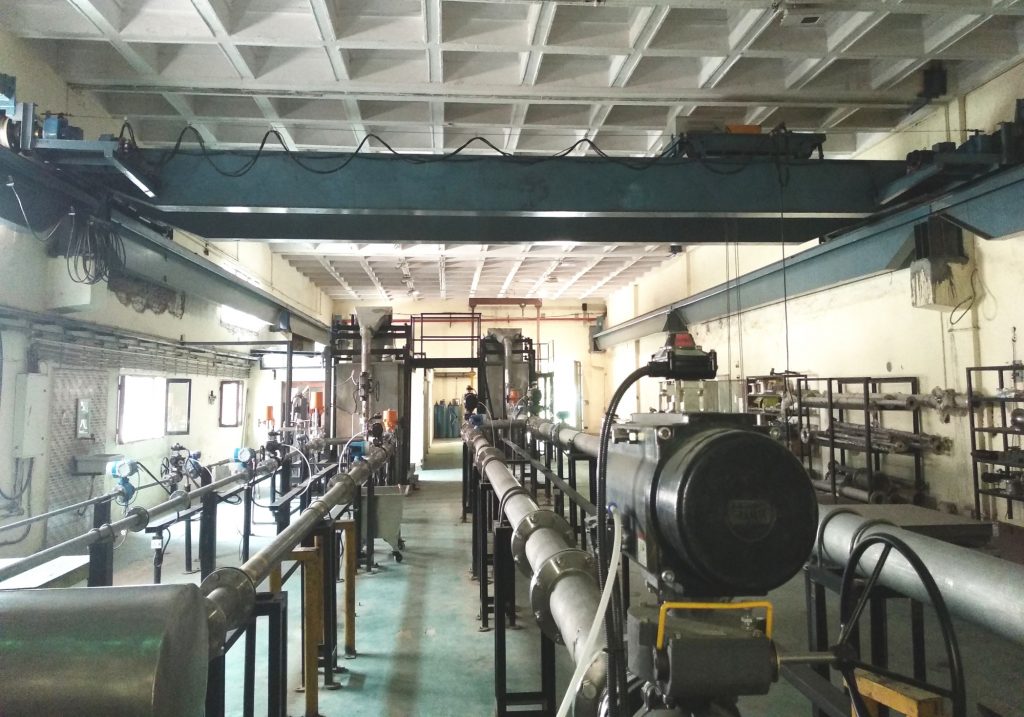
Typical Fluid Flow Calibration Services Performed
Depending on their scope, laboratories may conduct:
-Liquid flow meter calibration (water, oil, chemicals)
-Gas flow meter calibration (air, nitrogen, natural gas, industrial gases)
-Mass flow meter calibration
-Electromagnetic flow meter calibration
-Ultrasonic flow meter calibration
-Turbine flow meter calibration
-Positive displacement flow meter calibration
-Rotameter (variable area flow meter) calibration
-Differential pressure flow element calibration
-Flow transmitter and flow indicator calibration
-Custody transfer flow meter calibration
-On-site flow meter calibration services
GSAB verifies that all calibration methods are technically validated, reference standards are properly maintained, flow rigs are controlled, and measurement uncertainty is correctly evaluated with full traceability.
Who Can Apply?
Fluid flow calibration accreditation is suitable for:
-Independent calibration laboratories
-Industrial in-house calibration facilities
-Oil & gas service providers
-Water utility calibration centers
-Engineering and instrumentation companies
-Government metrology laboratories
-Contract calibration service providers
Accreditation Criteria
GSAB accredits fluid flow calibration laboratories based on:
-ISO/IEC 17025
-Applicable ILAC mandatory documents
-National and international metrology guidelines
-Industry-specific and regulatory requirements (where applicable)
Accreditation confirms:
-Technical competence of calibration personnel
-Validated calibration procedures and flow methods
-Proper reference standards and master meters
-Measurement uncertainty estimation
-Environmental and pressure control
-Equipment maintenance and intermediate verification
-Traceable calibration hierarchy
-Risk-based management system implementation
GSAB operates in accordance with ISO/IEC 17011, ensuring impartiality, technical integrity, and consistency in accreditation decisions.
GSAB follows a structured and transparent accreditation process:
1. Application & Scope Definition
The laboratory submits a defined calibration scope including flow type (liquid/gas), range, medium, and Calibration and Measurement Capability (CMC).
2. Document Review
Evaluation of:
-Quality Manual
-Flow calibration procedures
-Uncertainty budgets
-Traceability documentation
-Proficiency testing or inter-laboratory comparison participation
-Equipment maintenance records
-Internal audit and management review records
3. On-Site Assessment
-Evaluation of flow rigs and calibration setups
-Verification of reference standards and master meters
-Witnessing of live calibration activities
-Review of environmental and pressure control conditions
-Personnel competence assessment
4. Corrective Actions & Technical Review
-Closure of nonconformities
-Verification of corrective actions
-Independent technical review prior to final accreditation decision